|
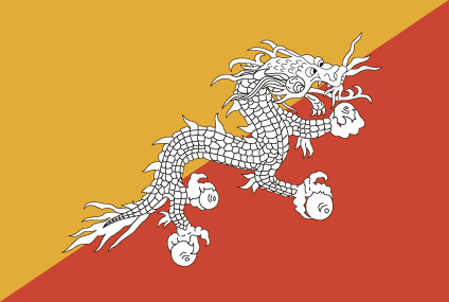
Bhutan is a Himalayan country in South Asia with Thimphu as its capital. Dzongkha is the official language, and the Bhutanese ngultrum (BTN) is the national currency. The economy is supported by hydropower, tourism, agriculture, construction, and public-sector activity, with hydropower exports to India playing an important role.
The Bhutan bonds market is small but includes government securities and other fixed-income instruments. Government bonds can be issued through public subscription or auction and listed through the Royal Securities Exchange of Bhutan (RSEB), providing an organized framework for secondary-market trading.
The Bhutan government bond market is primarily used to finance public-sector requirements and support domestic capital-market development. Government securities are generally denominated in Bhutanese ngultrum and are relevant for domestic banks, institutional investors, and other local participants.
The corporate debt market remains small. Companies generally rely on bank financing, retained earnings, and other private sources of capital, although the country's securities framework allows debt instruments to be listed and traded. This limits the overall scale of Bhutanese bonds.
For international investors, Bhutanese government bonds provide exposure to a very small Himalayan economy with strong economic links to India. Key factors include hydropower production, electricity exports, tourism, fiscal policy, external debt, and the development of domestic capital markets. Bhutan bonds therefore represent a specialized frontier-market opportunity.
|




 債券スクリーナー